
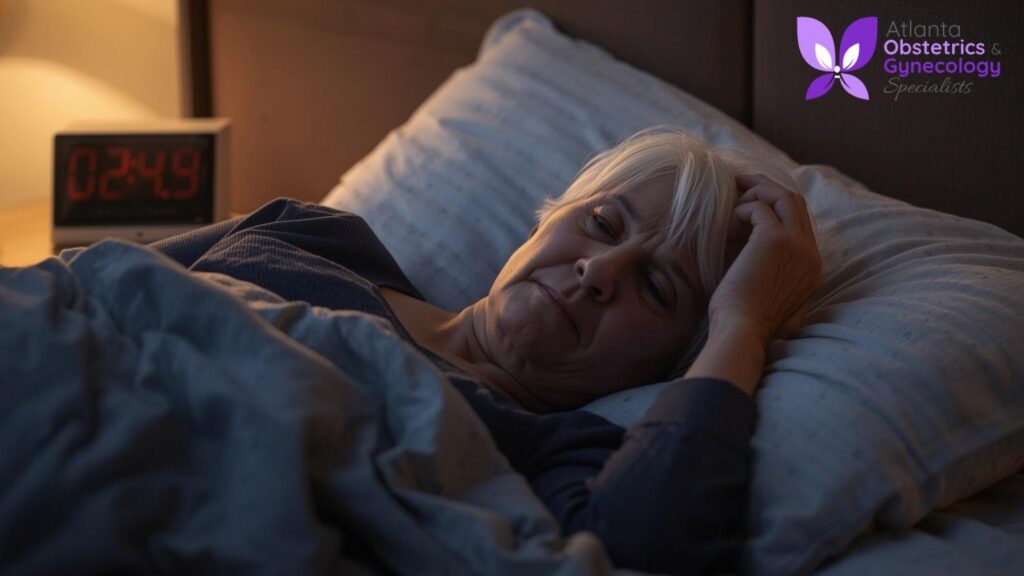
Many women experience poor sleep during menopause, and it’s often one of the most common concerns shared with doctors. Yet it also stays one of the most overlooked. If you’re lying awake at 2 a.m., waking up drenched in sweat, or feeling exhausted after spending hours in bed, your body is trying to tell you something important. Sleep disruption during menopause isn’t a sign of weakness or simply a natural part of aging. It’s a direct response to fluctuating hormones, and the right menopause treatment can make a significant difference in how you feel each day.
In this blog, we’ll explore how menopause affects your sleep and provide helpful solutions to improve your rest and overall well-being.
How Menopause Affects Your Sleep and What You Can Expect
Menopause brings about many changes in your body, and sleep disruption is one of the most common. As estrogen and progesterone levels fluctuate, they can significantly impact your sleep patterns. These hormonal shifts don’t just affect your menstrual cycle. They play key roles in regulating sleep. As estrogen declines, your body struggles to maintain a stable temperature, triggering hot flashes and night sweats that wake you up throughout the night. Progesterone, which has a natural sedative effect, also drops, making it harder for your brain to settle into a restful sleep.
How Hormonal Changes Impact Your Sleep-Wake Cycle
These hormonal changes also influence the brain chemicals responsible for regulating your sleep-wake cycle, like serotonin and melatonin. As these levels shift, both falling asleep and staying asleep become more difficult, even if your routine hasn’t changed.
Aging itself can also reduce the amount of time you spend in deep, restorative sleep. When combined with hormonal changes, it often results in fragmented sleep that leaves you feeling “tired but wired,” no matter how many hours you spend in bed.
LEARN MORE: Navigating Weight Gain During Menopause: Causes and Management Strategies
Common Sleep Disturbances During Menopause
Hot flashes and night sweats often steal the spotlight when it comes to menopause and sleep, but they don’t tell the whole story. Sleep disruption during menopause can show up in unexpected ways, and recognizing the full range of symptoms is key when you’re looking for the right menopause treatment.
Common Patterns Women Describe
Over 40% of women in their late 40s and 50s experience significant sleep disruption related to menopause. These disruptions go far beyond occasional restlessness:
- Waking frequently throughout the night, sometimes from 2 a.m. to 4 a.m., and struggling to fall back asleep
- Falling asleep easily but waking multiple times throughout the night
- Spending 7 or 8 hours in bed, but still feeling exhausted by mid-morning
- Experiencing brain fog, irritability, and difficulty concentrating due to poor sleep quality
These are common and predictable consequences of hormonal changes. When identified and addressed with the right care, improvements are often seen quickly.
How Night Sweats and Hot Flashes Disrupt Your Sleep Cycle
Night sweats work through a specific mechanism. Your brain becomes hypersensitive to even minor temperature changes, triggering sudden heat waves and heavy sweating that pull you out of the deepest, most physically restorative stages of sleep.
The cycle of repeated awakenings can train your brain to stay alert throughout the night. Even after a hot flash passes, your nervous system remains activated, making it harder to return to sleep. Over time, this pattern can create a sense of dread before bed. The fear of waking up drenched makes relaxation genuinely difficult before the first episode even occurs.
Sleep Issues You Might Not Expect
Some sleep issues are less commonly discussed but can become more frequent during menopause. Sleep apnea becomes more common as estrogen and progesterone levels drop, which can cause the upper airway to become more collapsible. This leads to repeated awakenings throughout the night, often mistaken for hormone-related insomnia. Restless legs syndrome, which frequently worsens during midlife, causes discomfort in your legs at night, further hindering your ability to sleep.
Perimenopause-related anxiety and depression can also drive insomnia, independently of vasomotor symptoms. Weight changes during menopause can worsen sleep-disordered breathing, reducing total sleep time and oxygen quality through the night. A menopause clinic can help identify the factors contributing to your symptoms, making it easier to find an effective treatment plan.
ALSO READ: Memory and Brain Fog: Cognitive Changes in Menopause
What Actually Helps: Treatments and Strategies

Not every approach works for every woman. The wide variety of menopause treatments available today includes lifestyle, medical, and behavioral strategies, and the most effective plan is one that addresses the specific causes behind your sleep disruption. Here’s what the evidence supports:
Practical Changes You Can Make at Home
Lifestyle changes are a reasonable starting point, particularly for mild to moderate sleep disruption. These adjustments can make a noticeable difference:
- Keep your bedroom cool and ventilated: Lowering the room temperature, using moisture-wicking sheets and pajamas, and adding a fan or cooling pad can help reduce how often night sweats interrupt your sleep.
- Follow a consistent sleep schedule: Going to bed and waking up at the same time every day, even on weekends, helps regulate your internal clock.
- Limit alcohol and late-night caffeine: Alcohol may feel relaxing at first, but it worsens hot flashes and disrupts sleep quality later in the night.
- Add gentle daily movement: Activities like walking, yoga, or light strength training help regulate cortisol levels and improve your mood without overstimulating your nervous system before bed.
- Step away from screens 60 to 90 minutes before bed: Blue light suppresses melatonin and delays sleep onset.
Many women also try over-the-counter options like melatonin supplements before seeking clinical care. Melatonin can support sleep onset for some women, but it does not address the vasomotor symptoms or hormonal shifts that drive most menopause-related sleep disruption. If you’ve already tried it without lasting relief, that’s a clear signal the underlying cause needs attention rather than a different supplement.
These habits form a strong foundation and complement clinical menopause care, but they rarely resolve severe sleep disruption on their own.
Hormone Therapy and Non-Hormonal Medication Options
For women whose sleep disruption stems primarily from hot flashes and night sweats, hormone therapy (HRT) is often the most effective path available. It addresses the underlying hormonal cause rather than managing individual symptoms. Many women report improvements in sleep quality within the first few weeks of treatment, though response times vary based on formulation and individual factors.
It is worth noting that HRT candidacy and timing can differ depending on your menopause stage. Women in perimenopause and those who are postmenopausal may have different options available, and a provider experienced in menopause care will factor your stage into the treatment conversation.
For women who prefer not to use hormones or cannot, non-hormonal options are available:
- Low-dose Selective Serotonin Reuptake Inhibitors (SSRIs): These medications can reduce the frequency and intensity of vasomotor symptoms, such as hot flashes and night sweats, helping improve sleep quality.
- Gabapentin: This medication has shown meaningful improvement in sleep for perimenopausal and postmenopausal women, helping with both sleep disruption and vasomotor symptoms.
Both options require a prescription and should be discussed with a healthcare provider who is experienced in menopause treatment. Your symptom profile, medical history, and personal priorities all shape which option fits best.
Cognitive Behavioral Therapy for Insomnia (CBT-I)
Cognitive behavioral therapy for insomnia (CBT-I) is a structured, non-medication approach and the first-line treatment for chronic insomnia recommended by sleep medicine specialists. It targets the thought patterns and conditioned behaviors that sustain insomnia long after its original trigger, including catastrophic thinking about lost sleep, clock-watching, and the conditioned arousal that makes lying in bed feel activating rather than restful.
CBT-I is relevant at any stage of the menopause transition. It produces lasting improvements without medication dependence, making it a strong option for both perimenopausal and postmenopausal women. Many women pursue it alongside clinical menopause treatment for an approach that addresses both the physical and behavioral dimensions of sleep disruption.
When to Bring This to Your OB-GYN
Sleep disruption during menopause is not something you need to simply endure. Knowing when to seek professional support is key to finding relief and improving your rest.
Signs It Is Time to Make an Appointment
Consider reaching out to a menopause specialist if any of the following apply:
- Sleep problems have persisted for several weeks and are impacting your mood, relationships, or ability to work.
- Night sweats or hot flashes are severe and frequent.
- A partner has noticed symptoms consistent with sleep apnea, such as gasping or choking at night.
- You’re waking up three or more times per night on a regular basis.
- You’re unsure if your insomnia is caused by menopause or another underlying condition.
You don’t need a diagnosis before booking an appointment. The evaluation itself will help answer these questions and guide you toward the right treatment.
Book Your Menopause Evaluation Today
Over-the-counter sleep aids may ease one night of restlessness, but they don’t uncover what is actually sustaining your disruption. A menopause evaluation goes further, examining hormone levels, thyroid function, mood changes, and potential sleep disorders to build a clearer picture of what your body needs.
At Atlanta Obstetrics & Gynecology Specialists, our OBGYN specialists conduct thorough evaluations to review your sleep patterns, symptom history, and contributing risk factors. We discuss menopause treatment options that reflect your complete medical picture, coordinate with sleep specialists when sleep apnea or restless legs syndrome is suspected, and build personalized care plans that bring lifestyle guidance, medication, and symptom management together.
Ready to rest again? Contact our team to schedule your menopause evaluation today.